Site Strategy
Clinical Trials
How Smarter Site Selection Saved a Phase 3 Lung Cancer Trial 9 Months and $30M
A large pharmaceutical company planned a Phase 3 non-small cell lung cancer (NSCLC) trial across the U.S. and Europe. PhaseV found that the original plan would take 33 months to enroll instead of 24. Combining ClinOps Optimizer site selection with Trial Optimizer design refinement, PhaseV projected 9 months saved, 33 fewer sites, 95 fewer patients and an estimated $30M in savings.
At a glance
Phase 3 NSCLC
Metric
Result
Projected time savings
9 months
Sites required
33 fewer
Subjects required
95 fewer
Estimated cost savings
$30M (from better sites)
Countries added
3
01
The challenge
The sponsor needed 1,000 patients in 24 months, all matching a specific patient profile. PhaseV’s baseline enrollment prediction showed only about 670 patients by month 24, and 33 months to reach 1,000. A site list built on past reputation and habit would have missed the goal, pushing out timelines and raising costs.
02
What we did
- Maximized the eligible patient pool. Trial Optimizer refined the planned adaptive design and tested how adjusting inclusion/exclusion (I/E) criteria, the rules for who can join, would change the number of eligible patients and enrollment potential. It also found room to reduce sample size.
- Optimized the site network. ClinOps Optimizer scored sites on competing trials, site novelty (new to the sponsor), emerging centers, investigator and site experience, and past performance. It added 15 new-to-client sites, excluded 12 because of competing trials and held 3 in reserve (one investigator on sabbatical).
- Tracked performance in real time. A Site Analytics Dashboard gave the team live site performance data so they could correct course early.
03
The results
- 9 months of projected time savings
- 33 fewer sites and 95 fewer subjects required
- 3 additional countries added to the plan
- An estimated $30M in cost savings from better sites
Why it matters
What it changes, team by team.
- Executives and finance: Fewer sites and patients means lower cost, and the 9 months saved brings the launch forward.
- Clinical operations: A ranked site list, with sites to avoid and backups ready, and a dashboard to catch problems early.
- Biostatisticians and clinical scientists: I/E criteria and sample size tested by simulation before they are locked.
- Patients: Fewer patients enrolled and a faster path to a potential new treatment.
FAQ
Questions, answered.
What is clinical trial site selection?
Choosing which hospitals and clinics will enroll patients. The right sites recruit faster and more reliably.
How can a trial need fewer sites and still enroll on time?
Sites differ widely in productivity. Choosing sites with the right patients and less competition makes each one count for more.
What are inclusion/exclusion criteria, and why do they affect timelines?
They are the rules for who can join. Stricter rules shrink the eligible pool and slow enrollment.
Source
Based on real client work, with details adapted and anonymized for confidentiality.
More case studies
All case studies →
How Smarter Site Selection Saved a Phase 3 Lung Cancer Trial 9 Months and $30M
A Phase 3 lung cancer trial was set to miss its 24-month goal. Smarter sites and design cut 9 months, 33 sites and 95 patients.
$30Mestimated cost saved
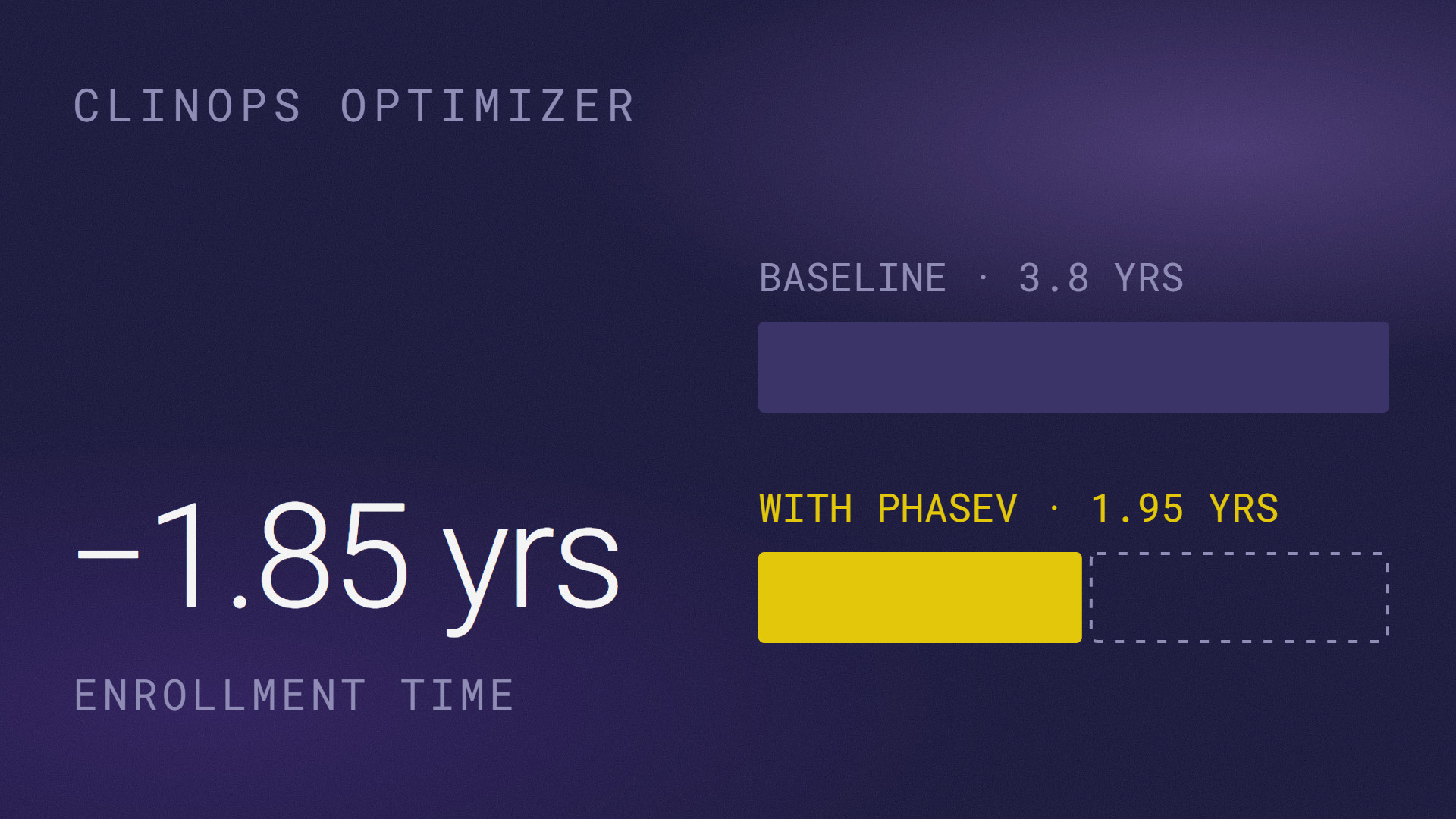
How Causal ML Site Selection Nearly Halved Enrollment Time in Two Global COPD Trials
Two global Phase 3 COPD trials faced up to 3.8 years of enrollment. A causal ML site list cut the estimate to 1.95 years with 25 fewer sites.
1.95years to enroll, down from 3.8
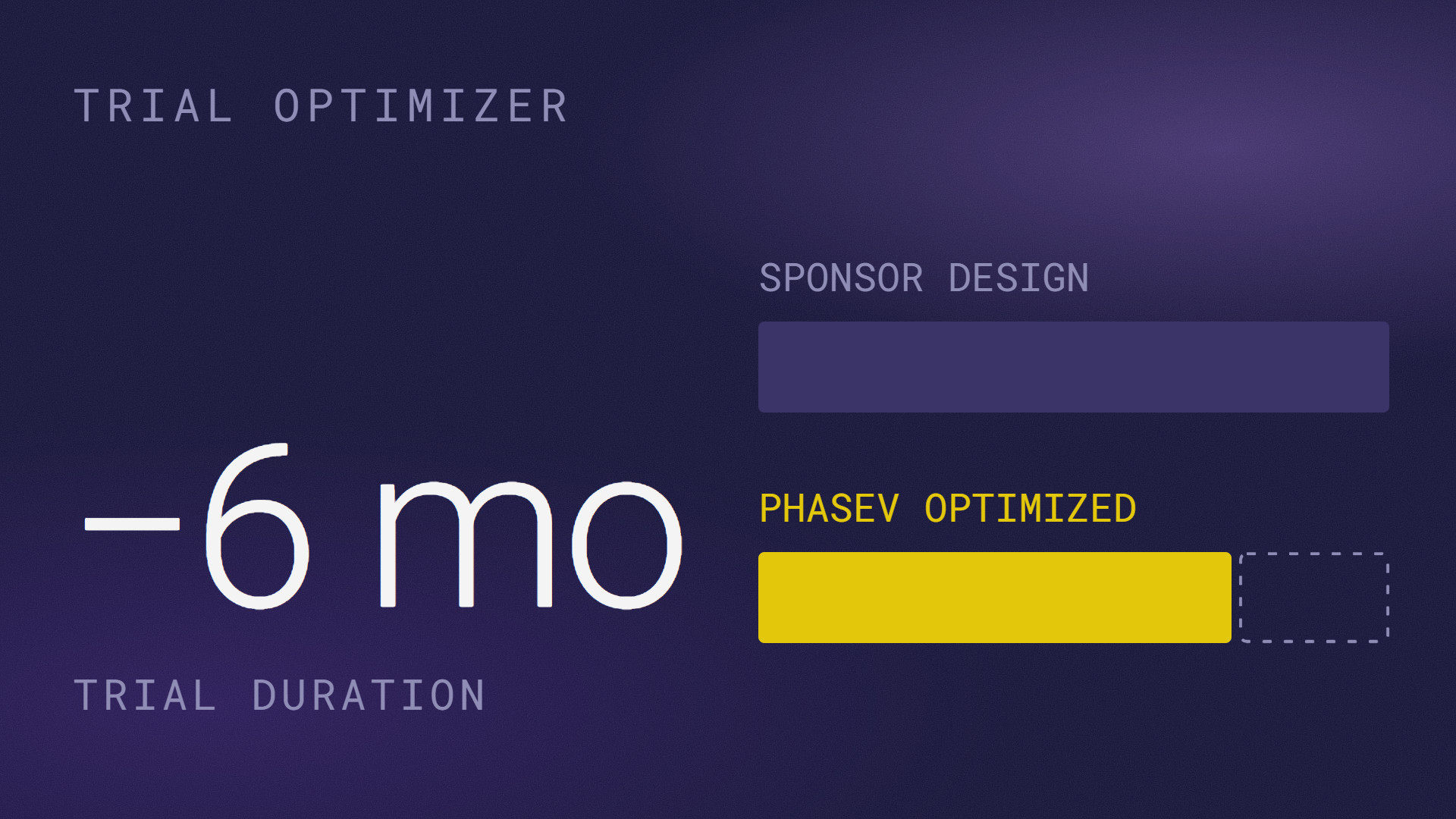
How AI-Optimized Adaptive Design Cut a Phase 3 Infectious Disease Trial by 6 Months
Simulating millions of designs found a Phase 3 adaptive trial that is 25% shorter with 9% fewer patients, saving $6.05M at about 90% power.
25%shorter trial
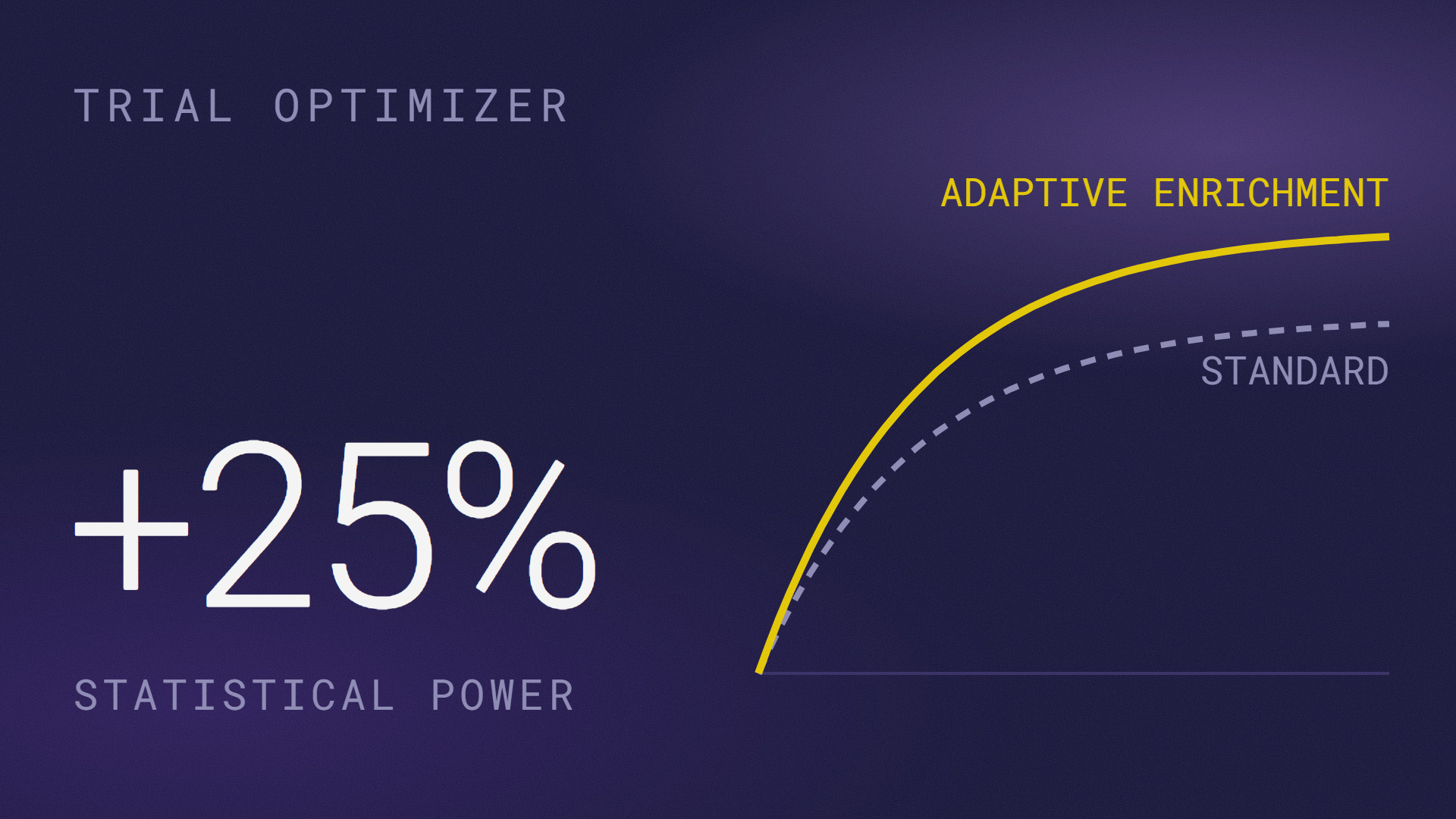
How Adaptive Enrichment Gave a Phase 2 Rheumatic Disease Trial 25% More Statistical Power
Simulation designed a Phase 2 rheumatic disease trial that focuses enrollment on likely responders, with a 25% gain in statistical power.
25%more statistical power